Electrophysiology · Cardiovascular
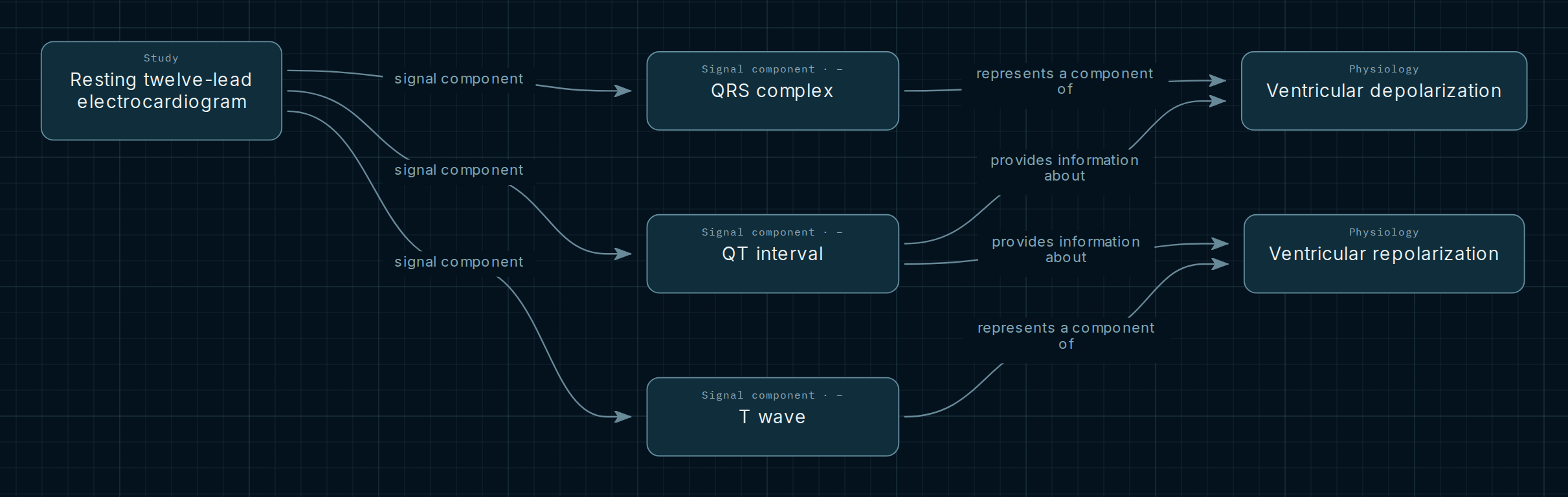
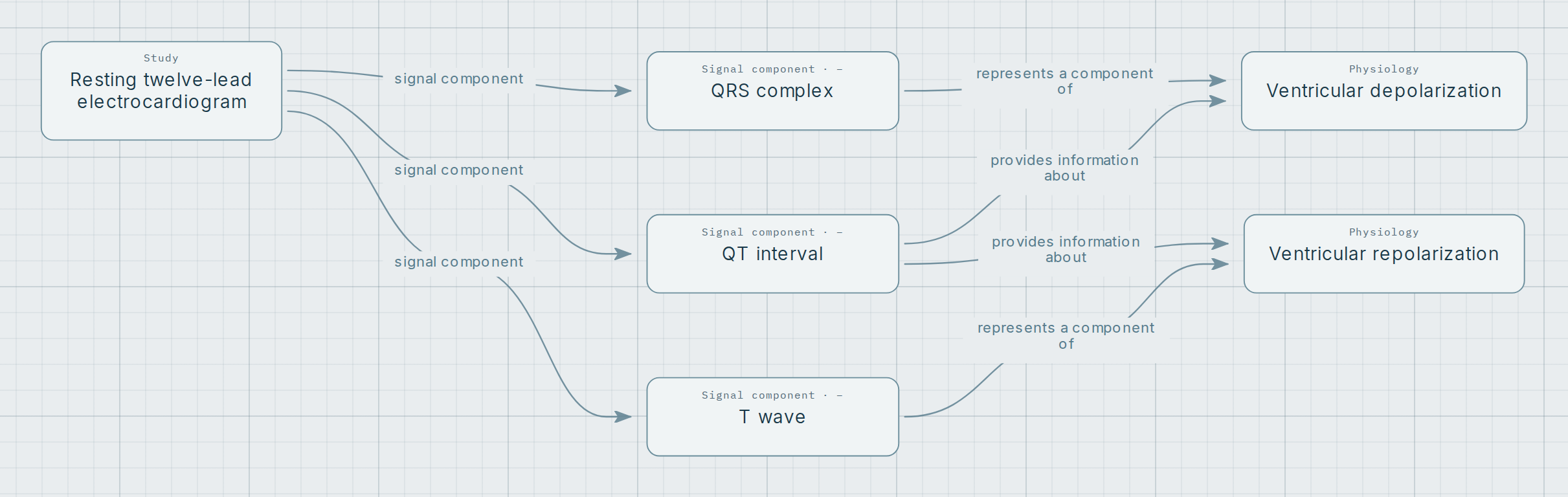
ECG: from the QRS complex and T wave to the QT interval
Connect the QRS complex, T wave and QT interval with ventricular depolarization and repolarization in a map from the KatavMD Atlas.
Read guide →KatavMD Atlas · Public Beta
Study medicine through its connections. Each guide introduces a map and takes you into the Atlas to explore it.
Electrophysiology · Cardiovascular
Connect the QRS complex, T wave and QT interval with ventricular depolarization and repolarization in a map from the KatavMD Atlas.
Read guide →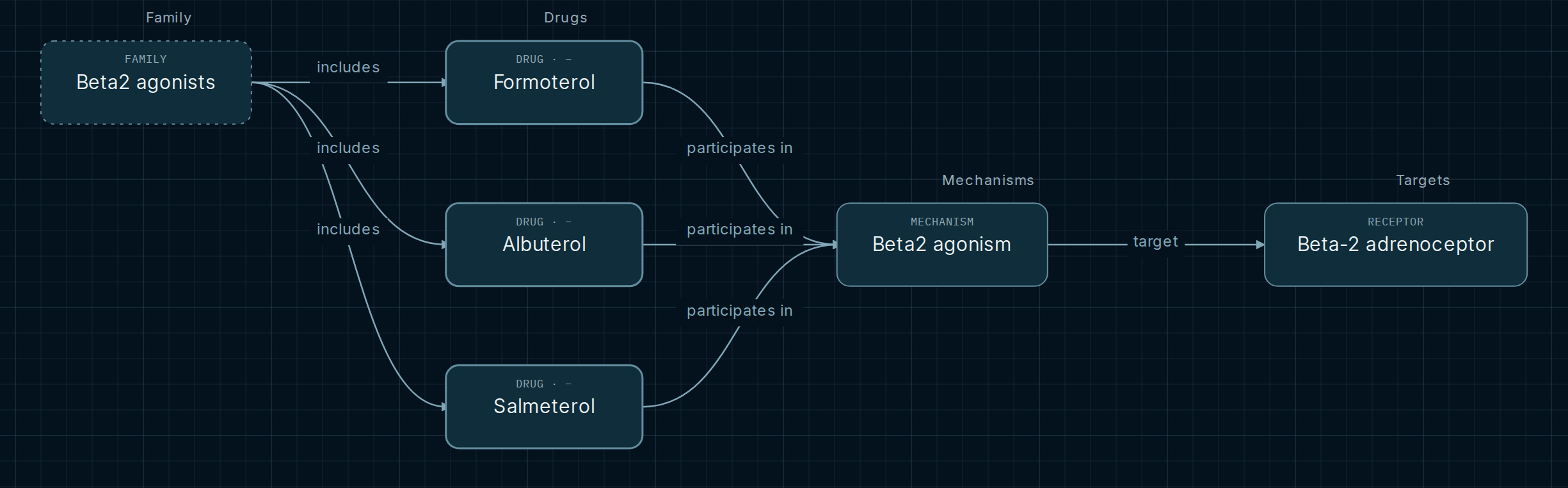
Pharmacology · Receptors
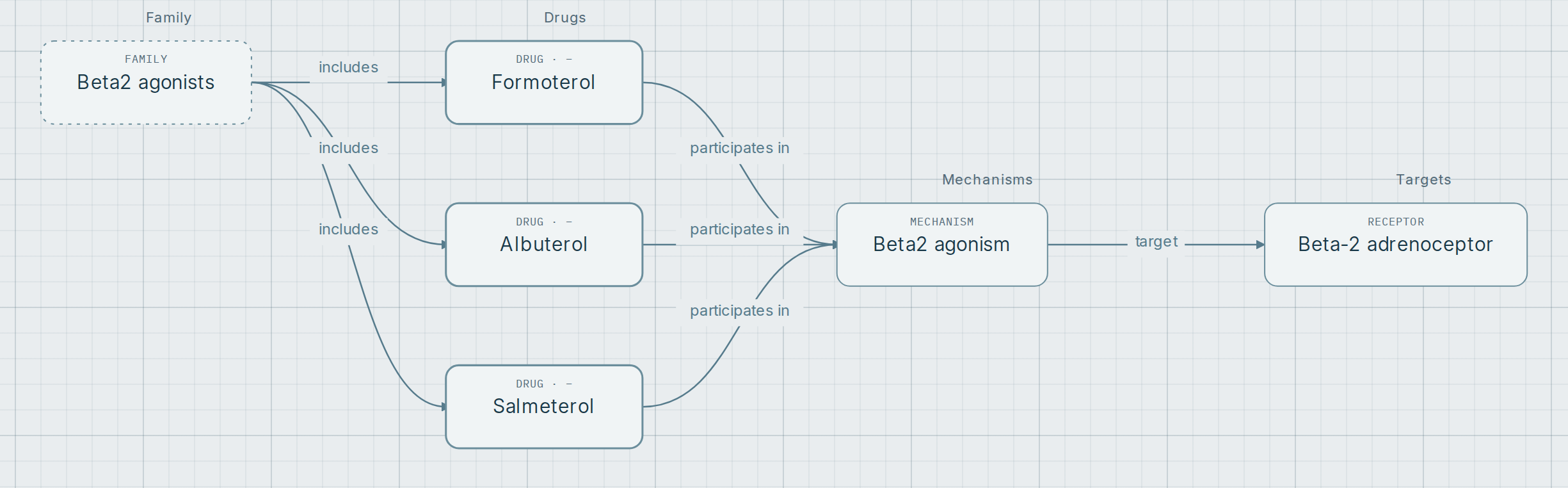
Explore how salbutamol (albuterol) connects to beta-2 agonism and its receptor, and the mechanism it shares with formoterol and salmeterol in the KatavMD Atlas.
Read guide →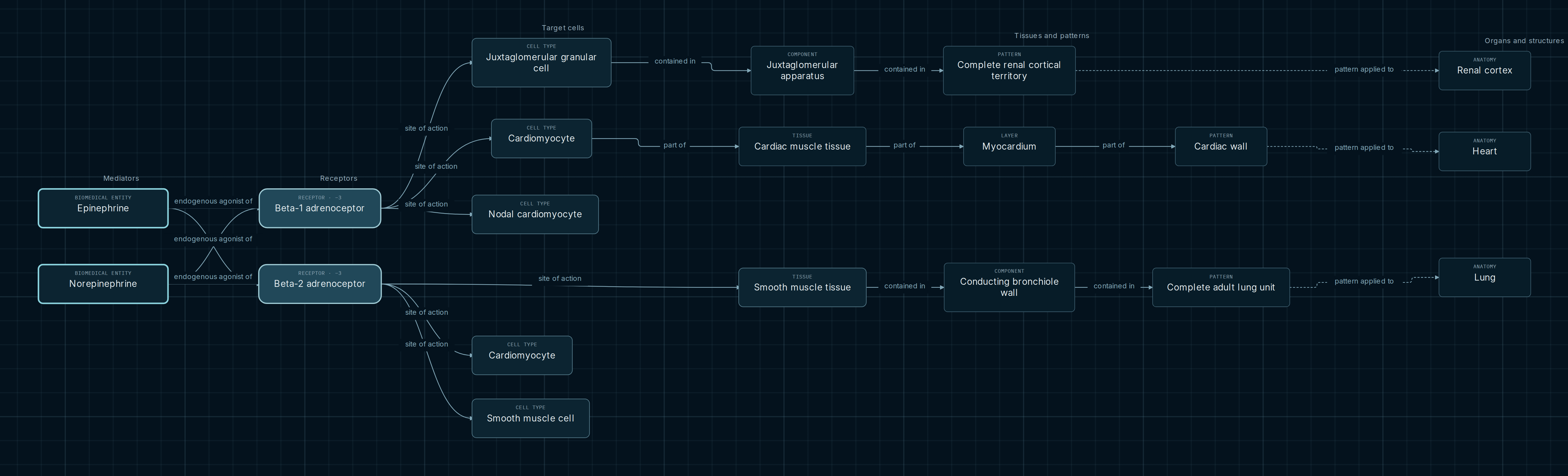
Receptors · Histology · Anatomy
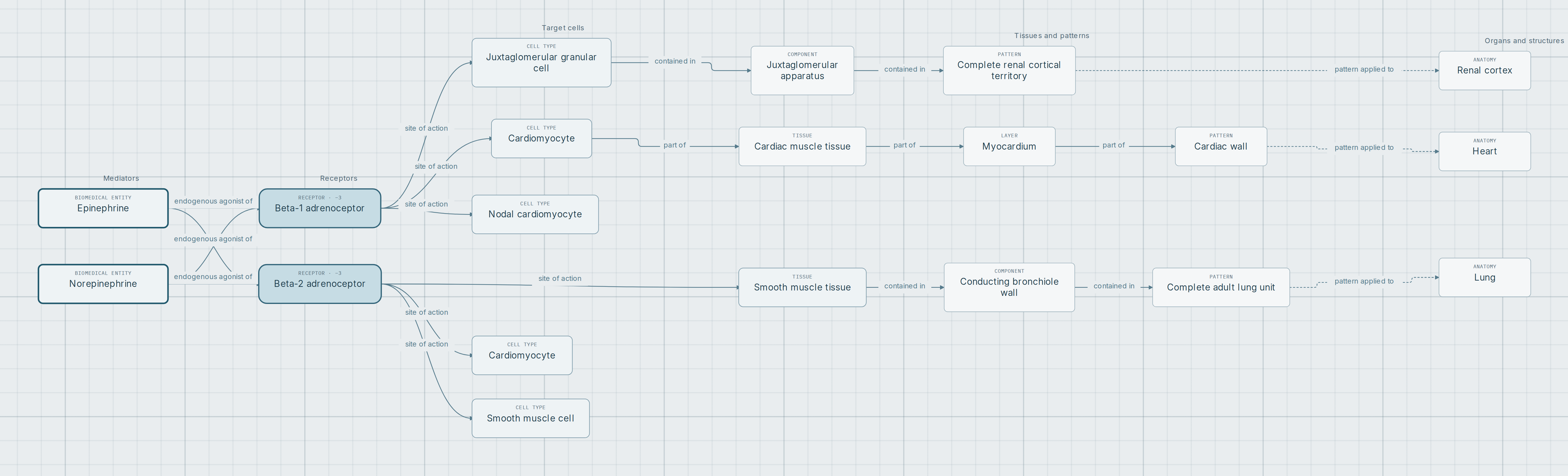
Compare beta-1 and beta-2 receptors through epinephrine, norepinephrine, target cells, and documented cardiac, renal and bronchiolar applications.
Read guide →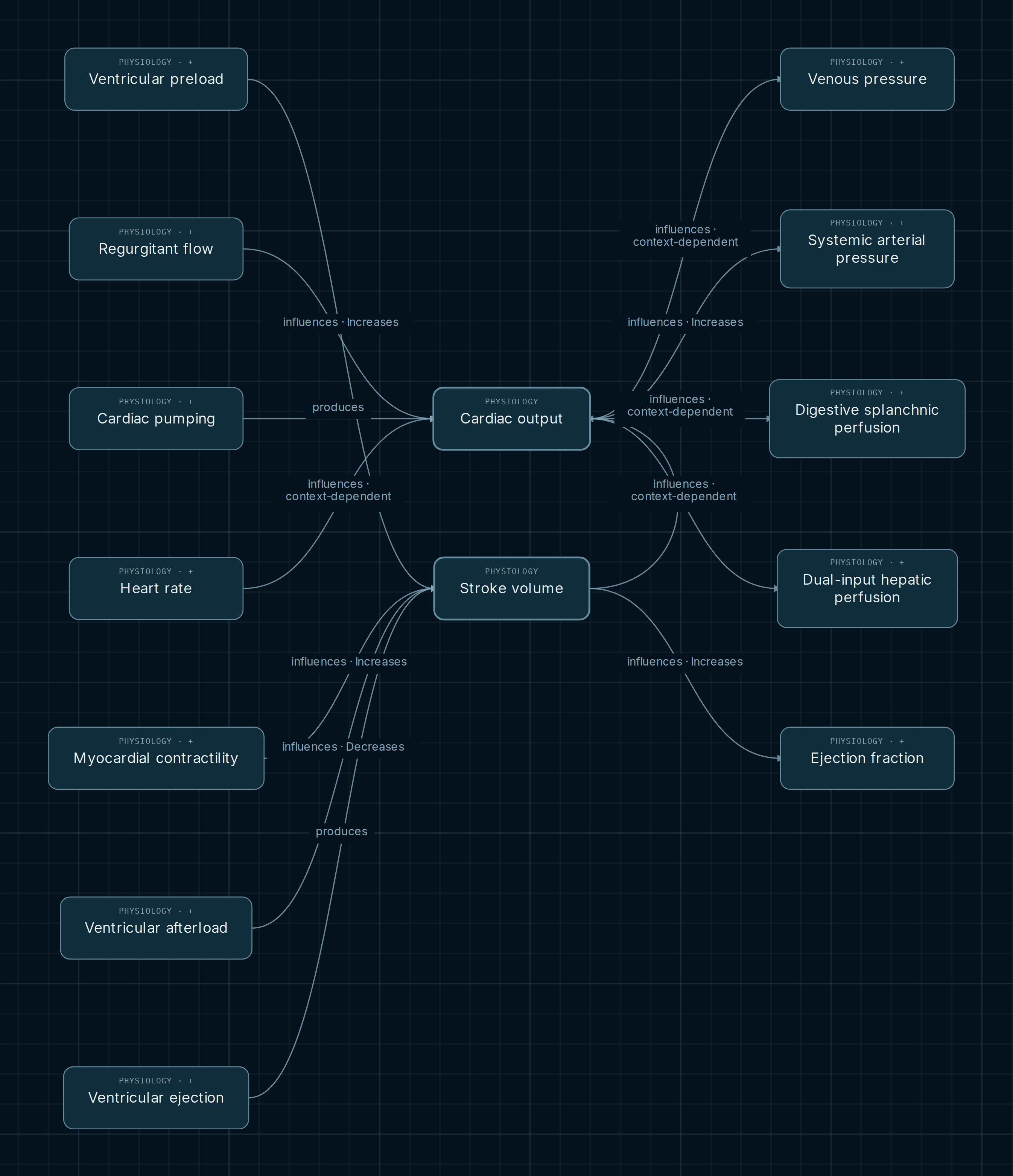
Physiology · Cardiovascular
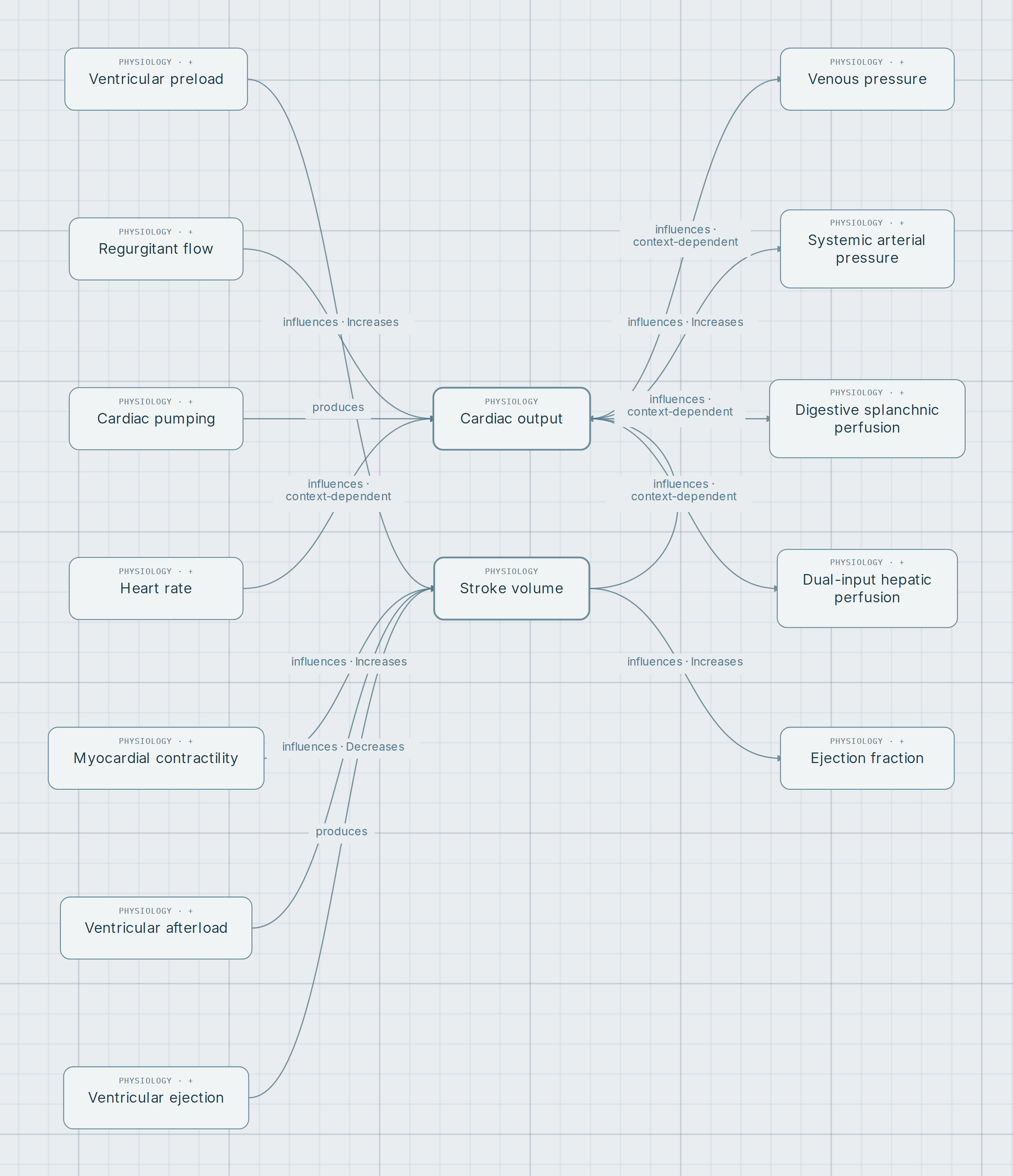
Explore cardiac output, stroke volume, preload, afterload and contractility, with a separate view of autonomic and receptor regulation.
Read guide →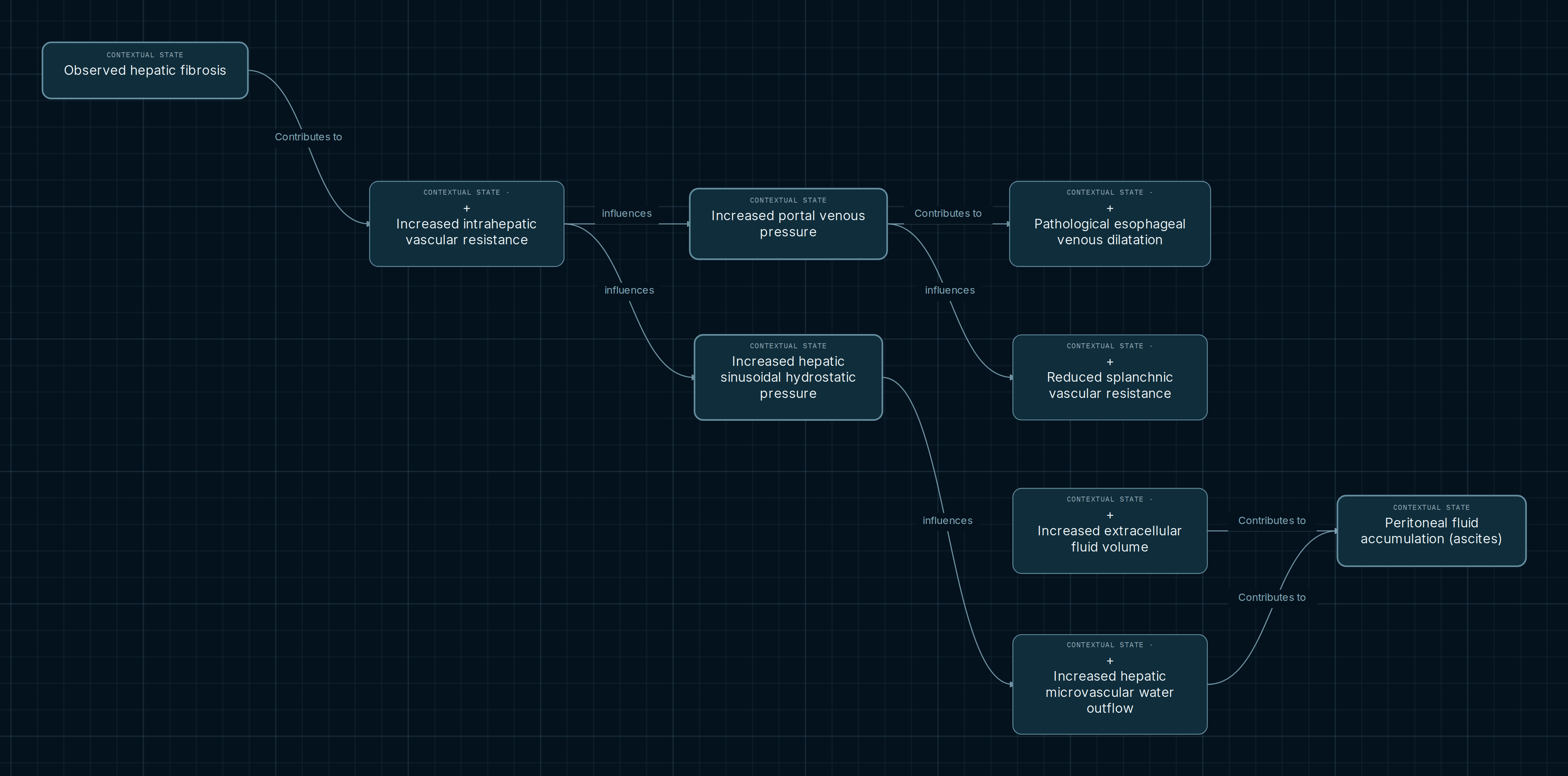
Pathophysiology · Liver and circulation
Explore clinical relationships around cirrhosis and a map of hepatic fibrosis, vascular resistance, portal pressure and ascites, with conditions and sources.
Read guide →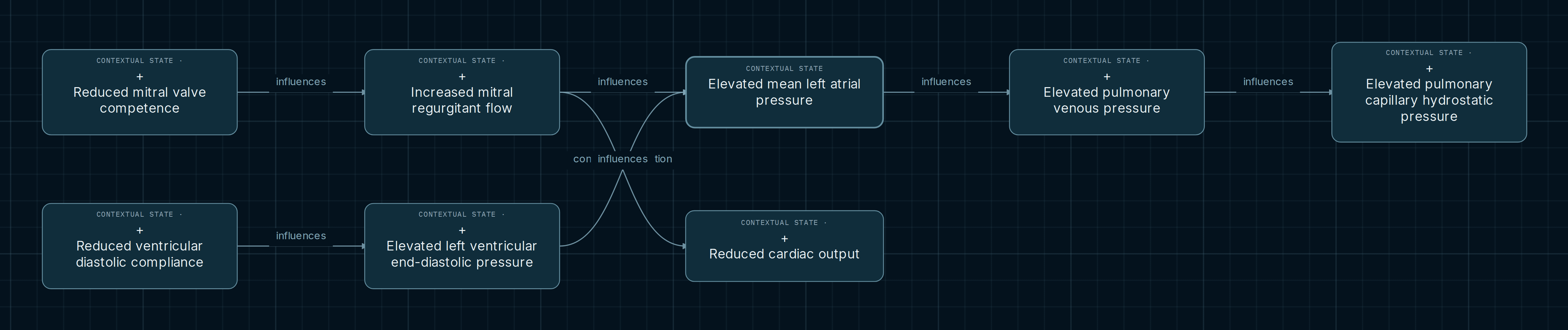
Pathophysiology · Cardiovascular and pulmonary circulation
Compare two pathways converging on left atrial pressure and follow their connections to pulmonary pressures and cardiac output in an interactive map.
Read guide →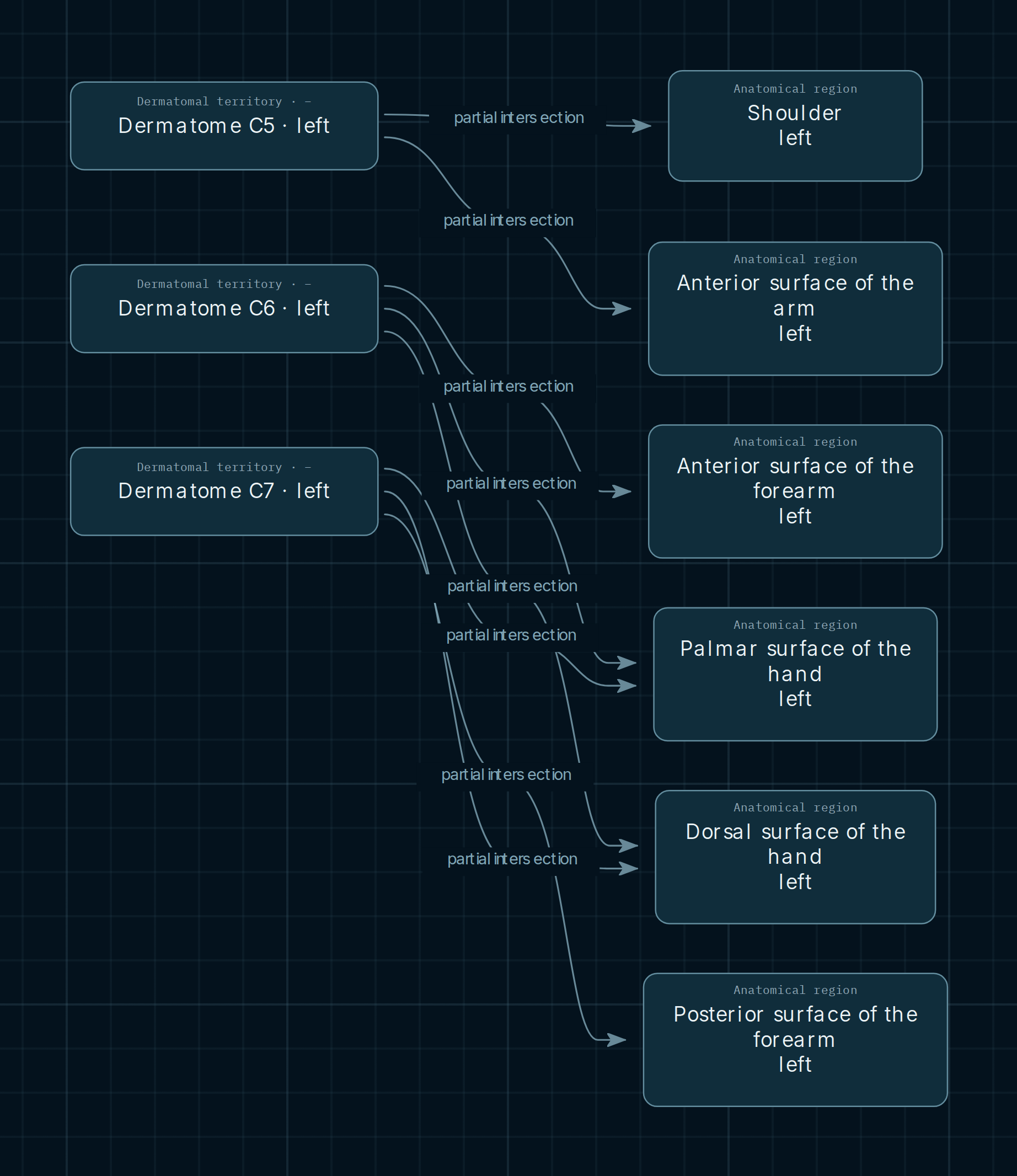
Anatomy · Nervous system
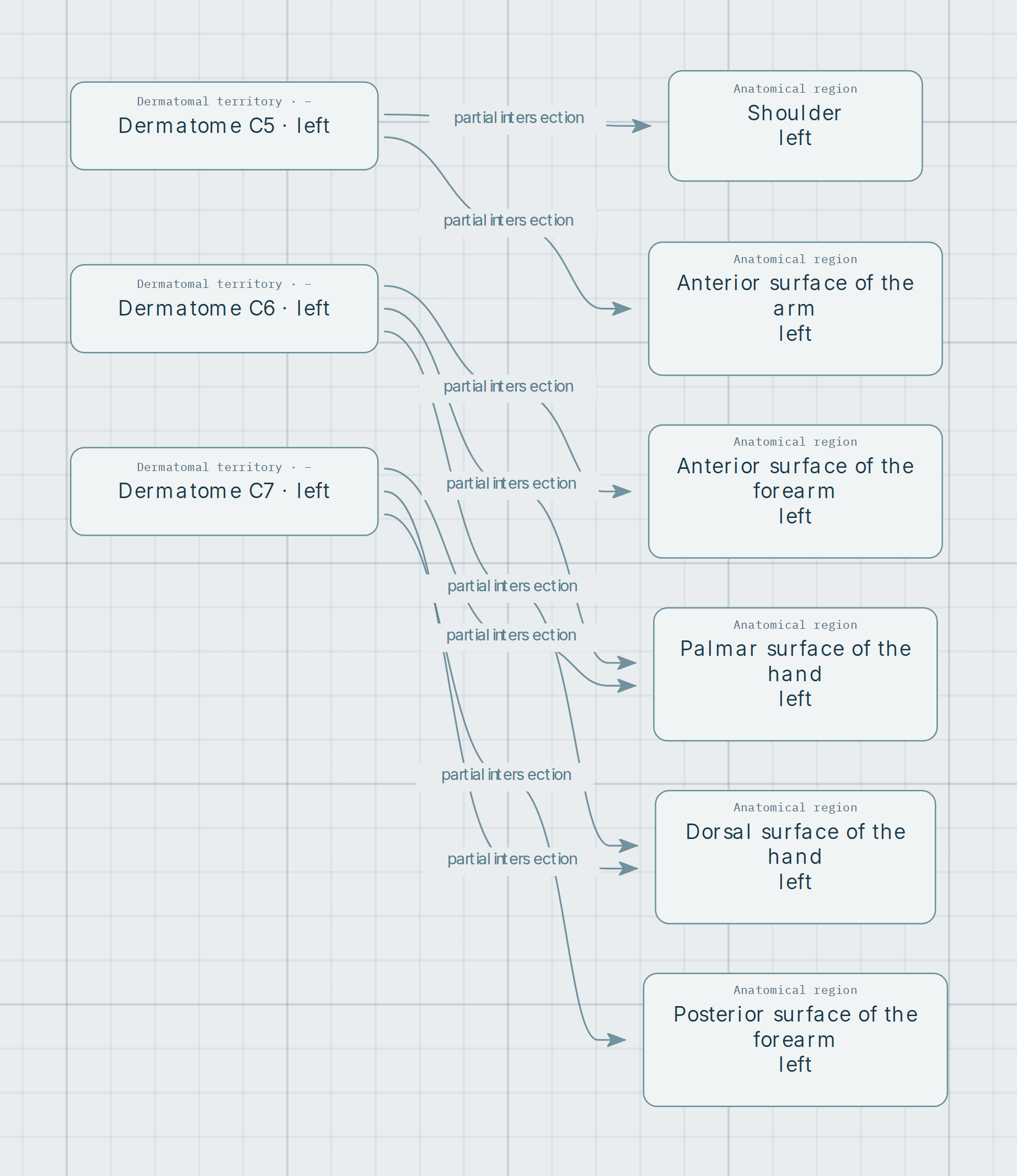
Compare C5, C6 and C7 dermatomes in an interactive map connecting the shoulder, arm, forearm and hand. Learn how to read their regional intersections.
Read guide →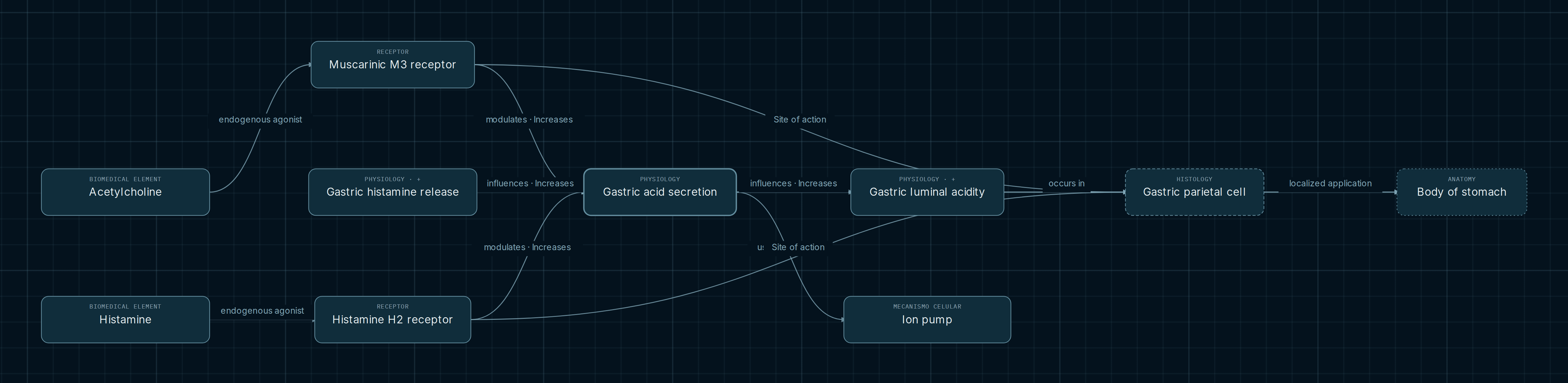
Physiology · Digestive system
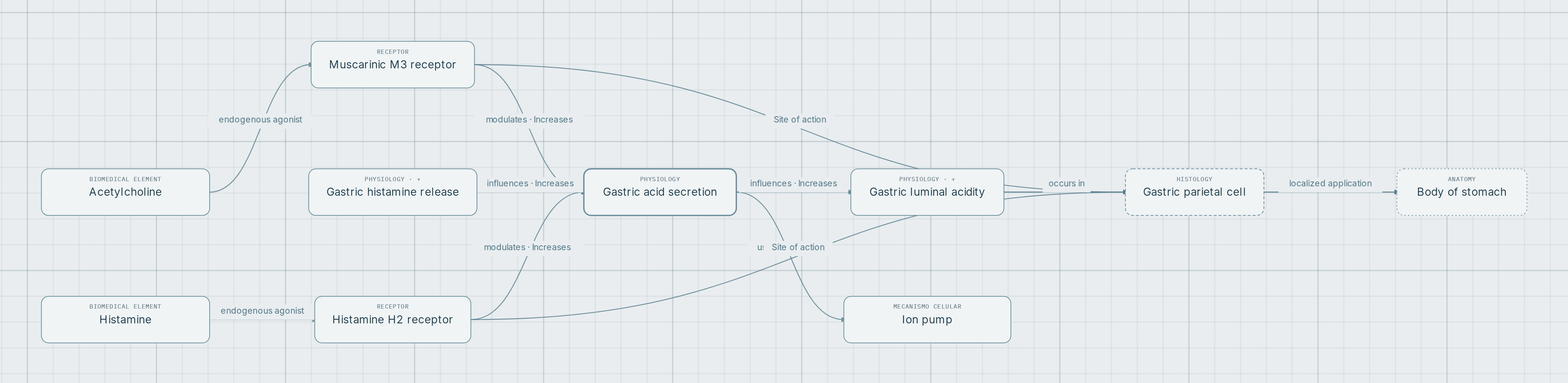
Follow acetylcholine/M3 and histamine/H2 convergence on acid secretion, its effector cell and gastric context, with relationship conditions and sources.
Read guide →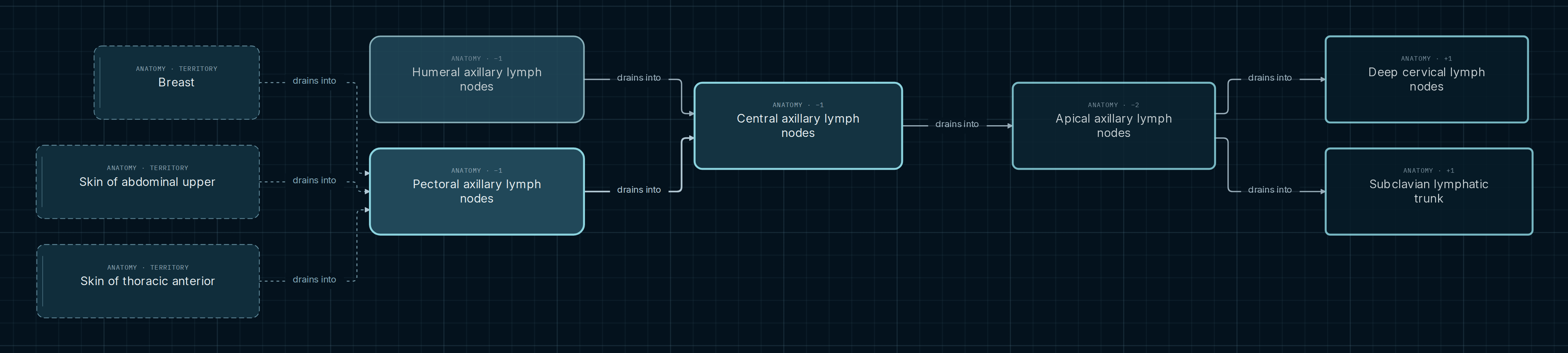
Anatomy · Lymphatic networks
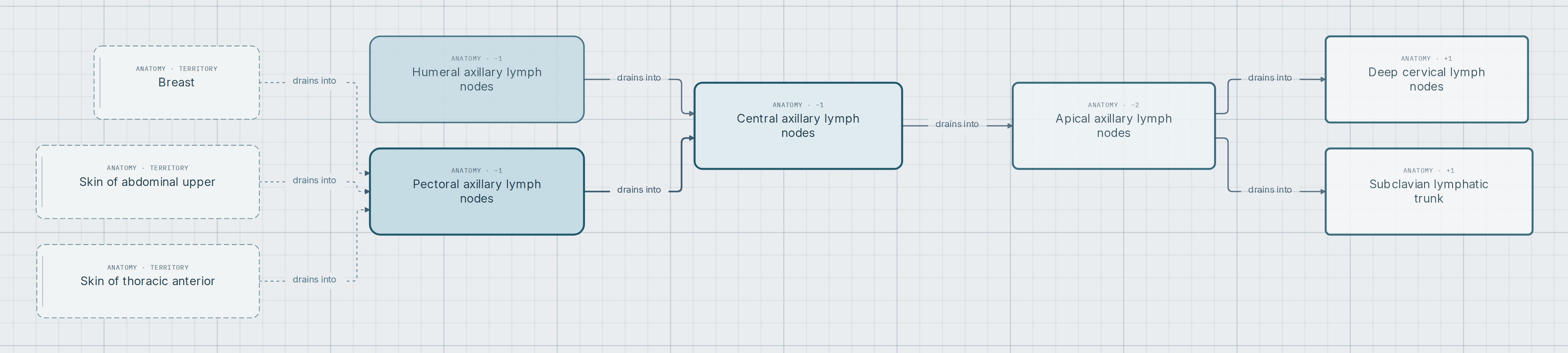
Explore how breast and skin territories connect with axillary groups, where pathways converge, and how cervical and venous outlets extend the network.
Read guide →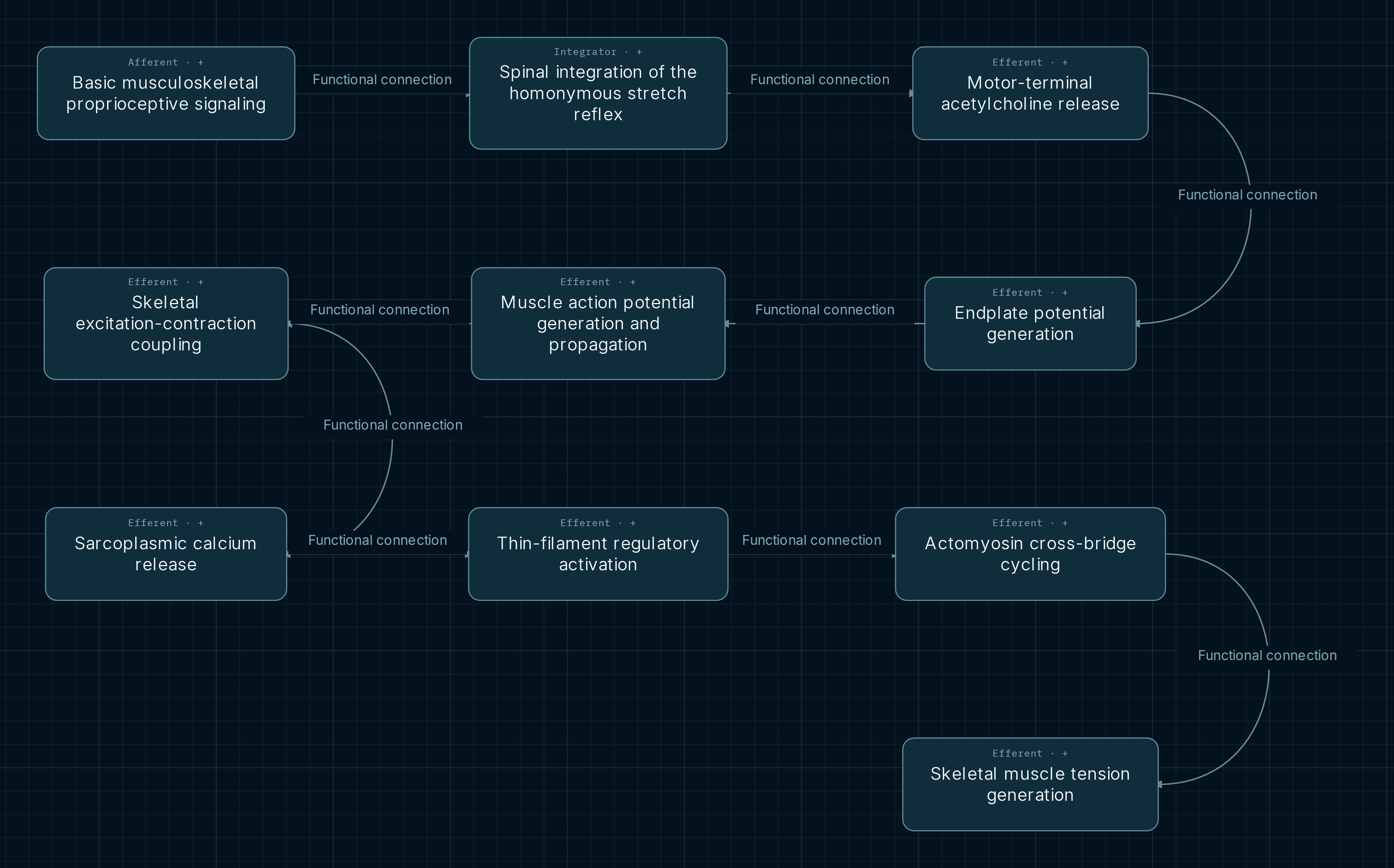
Physiology · Nervous and musculoskeletal systems
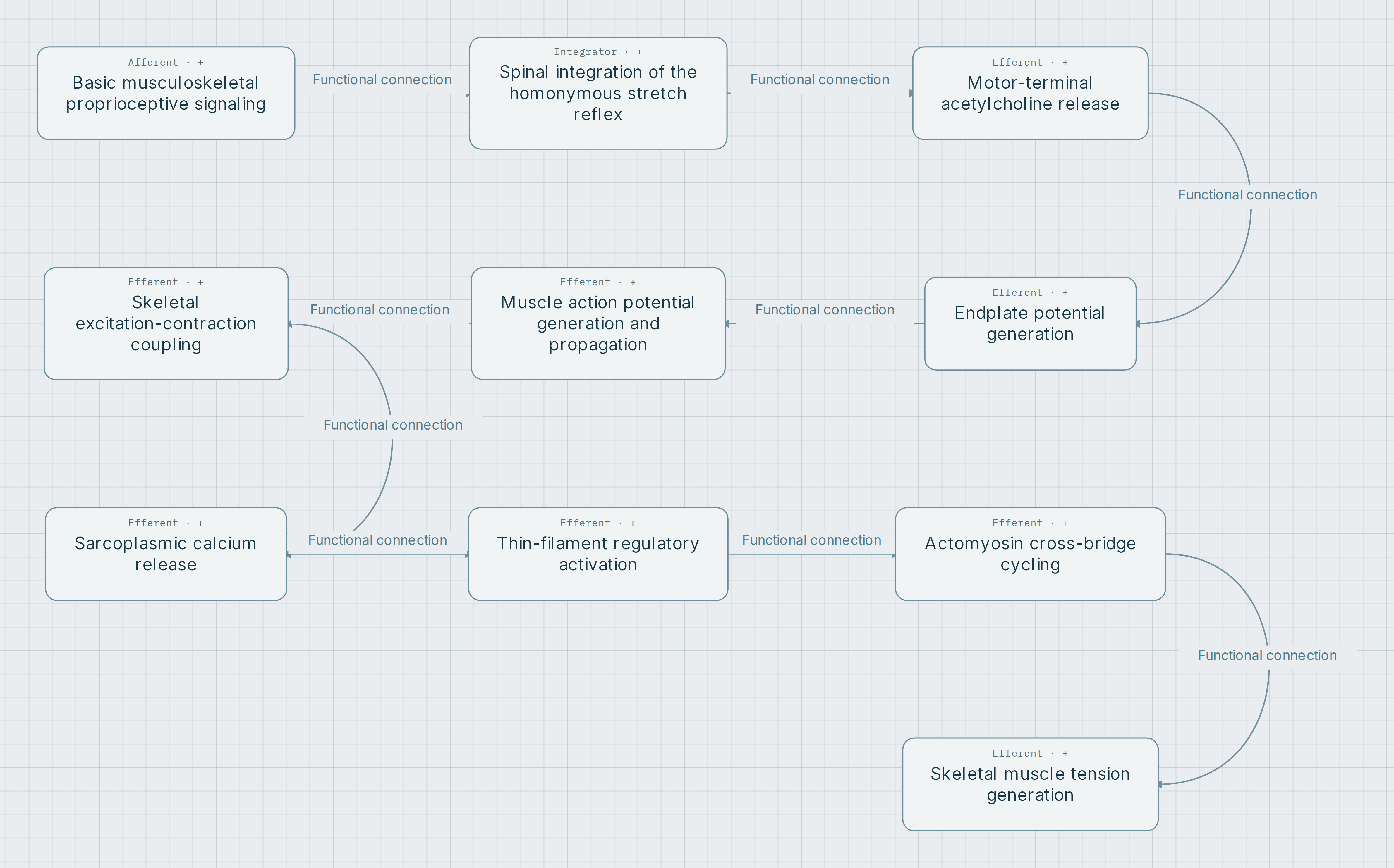
Compare patellar and Achilles reflexes from muscle spindle input to tension, with nerves, spinal segments and muscle activation stages.
Read guide →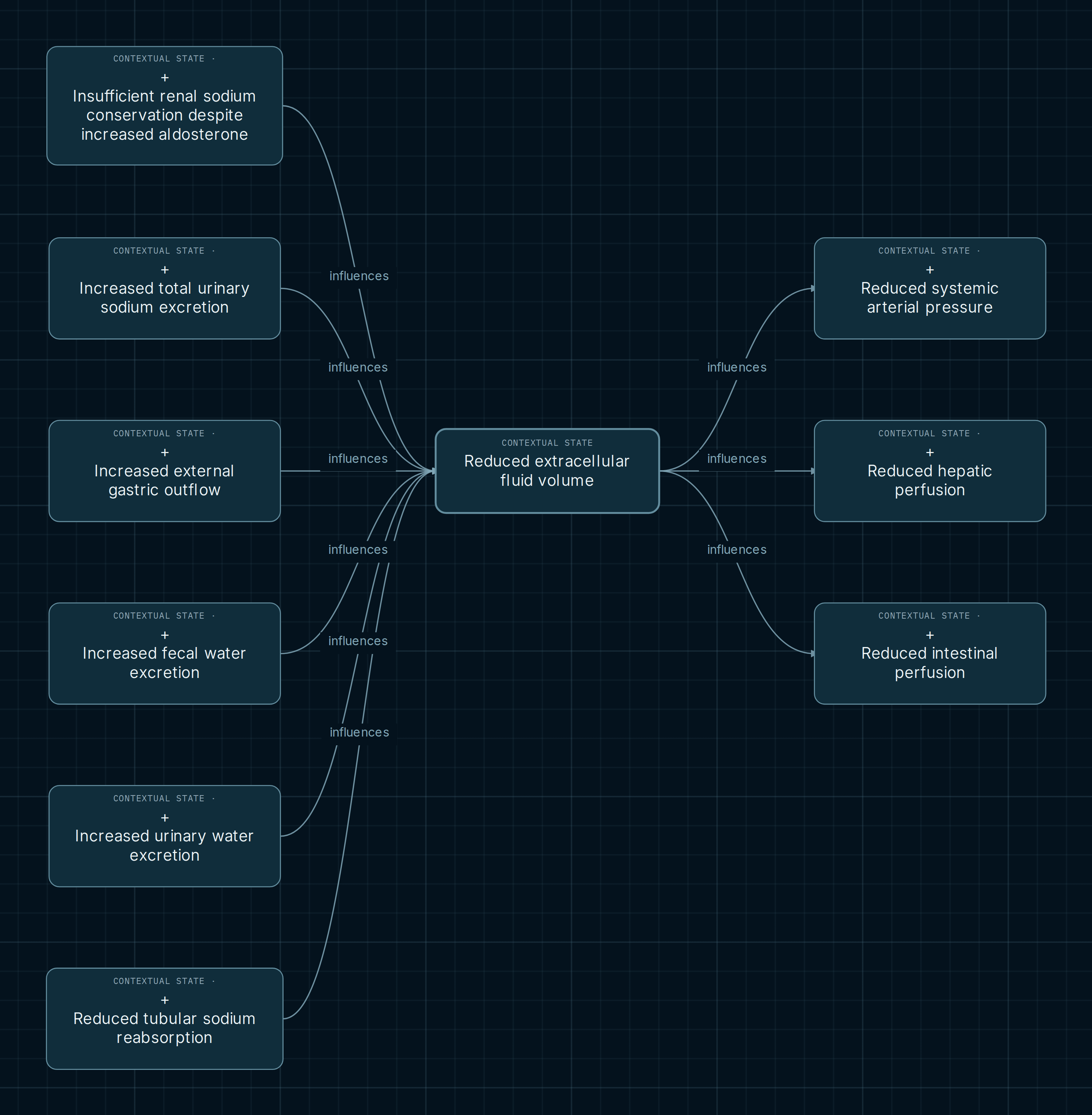
Pathophysiology · Digestive, renal, and perfusion
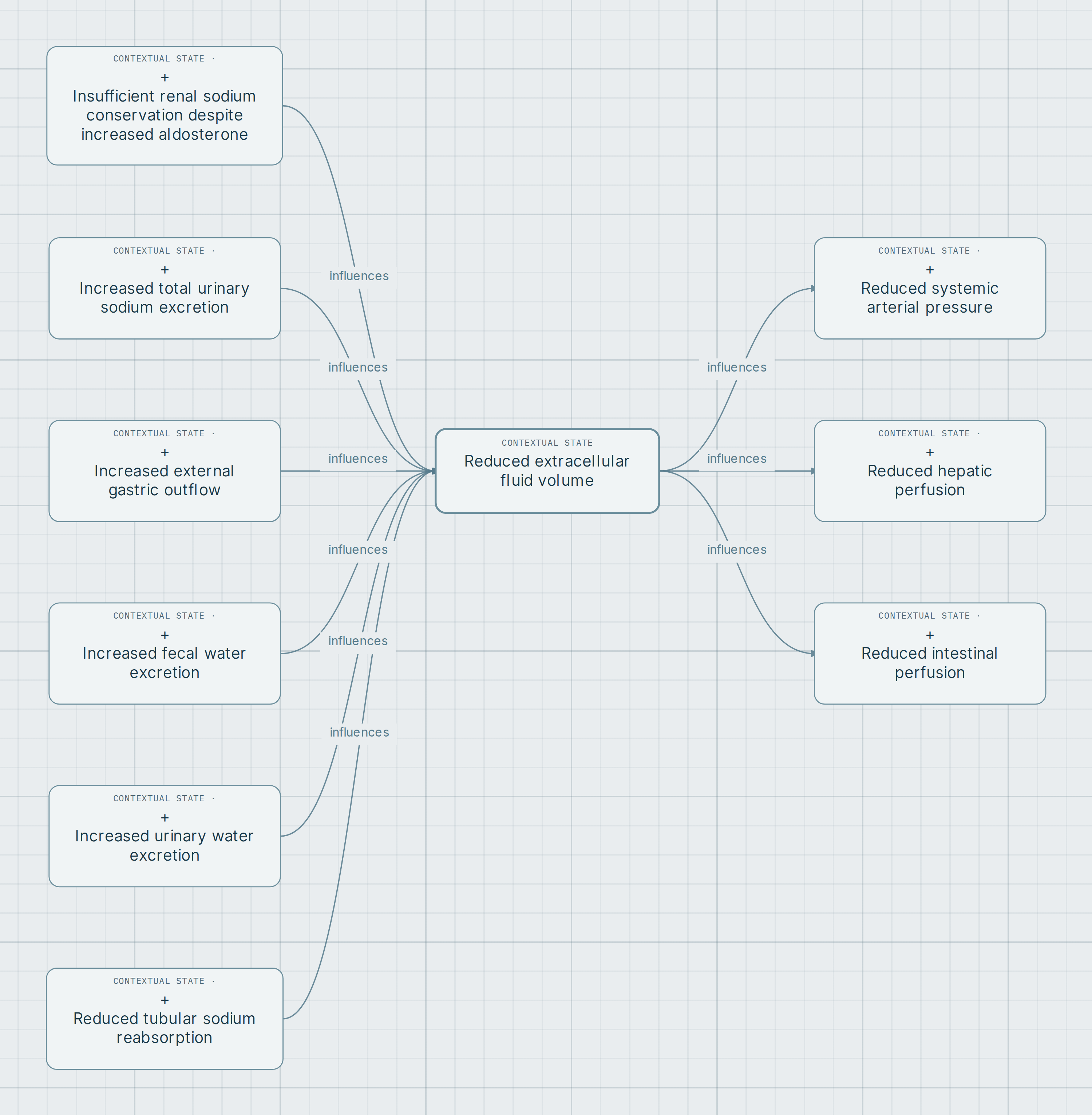
Connect digestive losses, renal sodium and water handling, extracellular volume, and organ perfusion. Distinguish balance, pressure, and regional blood flow.
Read guide →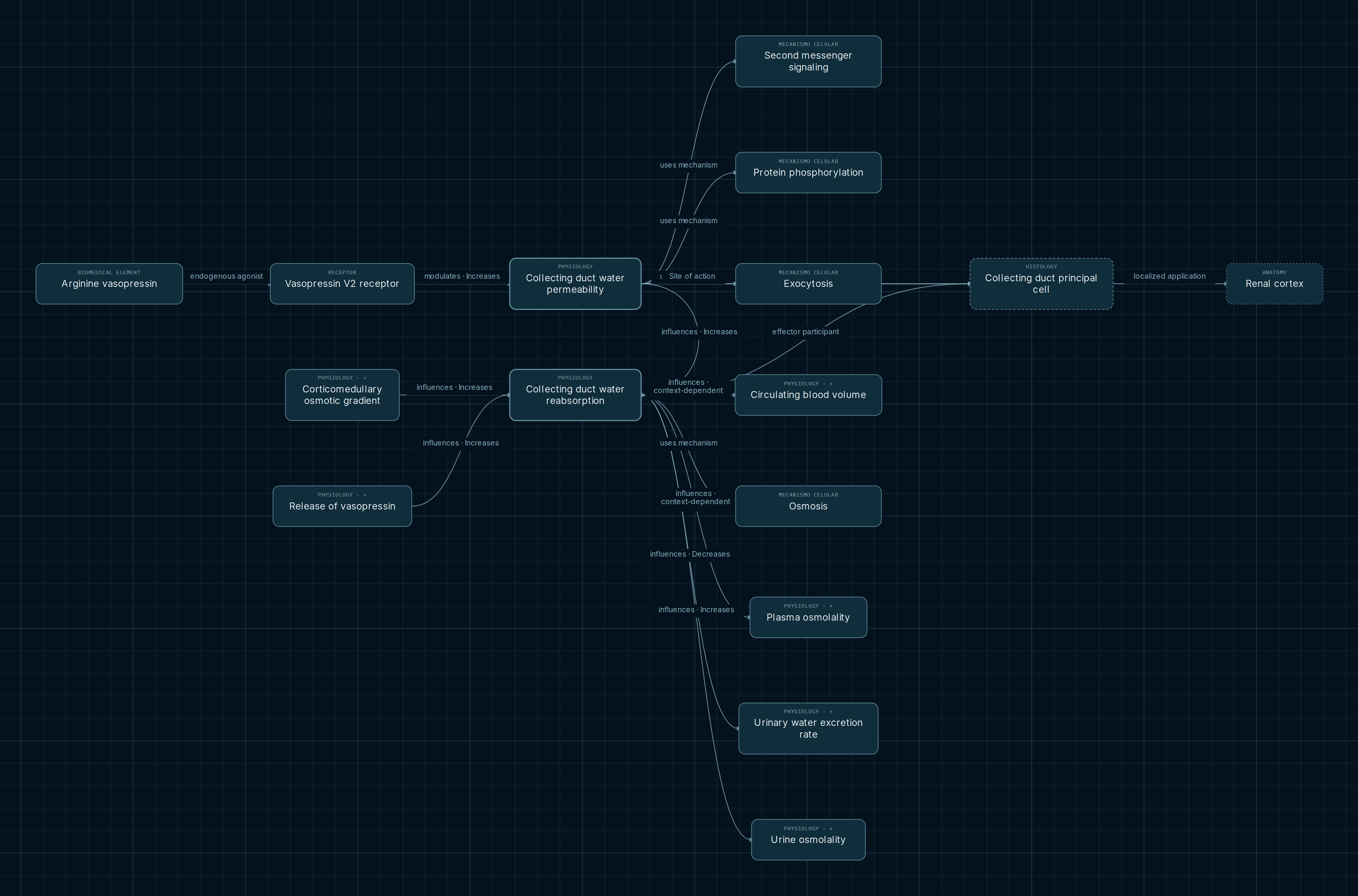
Physiology · Urinary system
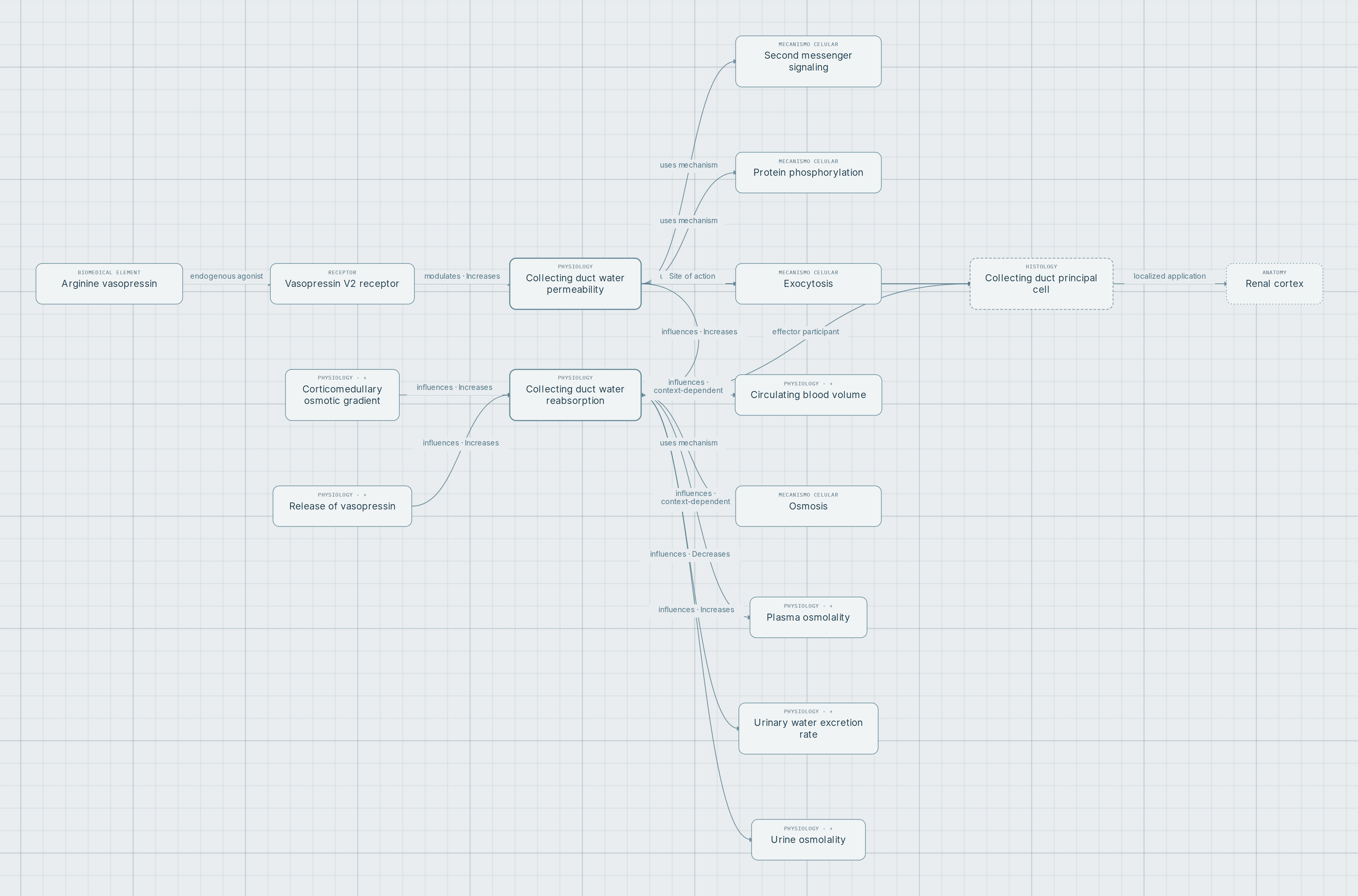
Explore how vasopressin, the V2 receptor, permeability and the osmotic gradient converge on water reabsorption, with cellular mechanisms and evidence limits.
Read guide →