Pharmacology · Receptors
Salbutamol (albuterol): mechanism of action and the β₂ receptor
Salbutamol, known as albuterol in the United States, is a β₂ agonist that promotes airway smooth muscle relaxation. The map keeps the drug, mechanism and receptor distinct: following their connections lets you compare it with other members of the family.
Explore this map in the AtlasOpens albuterol, formoterol and salmeterol with their shared mechanism and target.
The map
Reading the connections
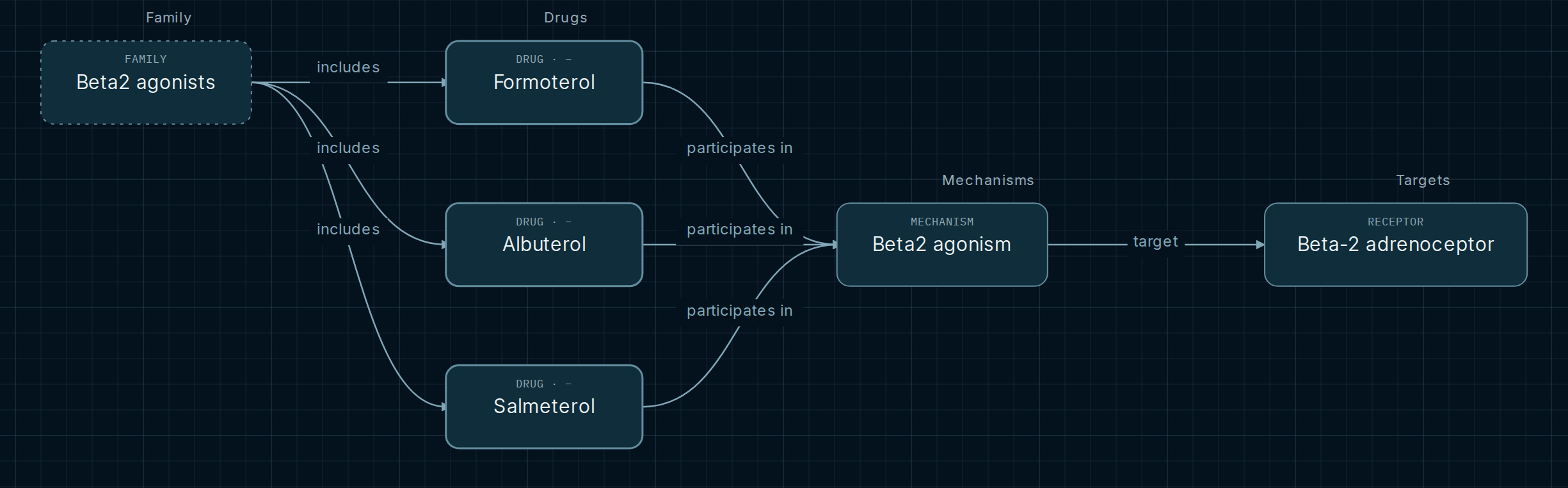
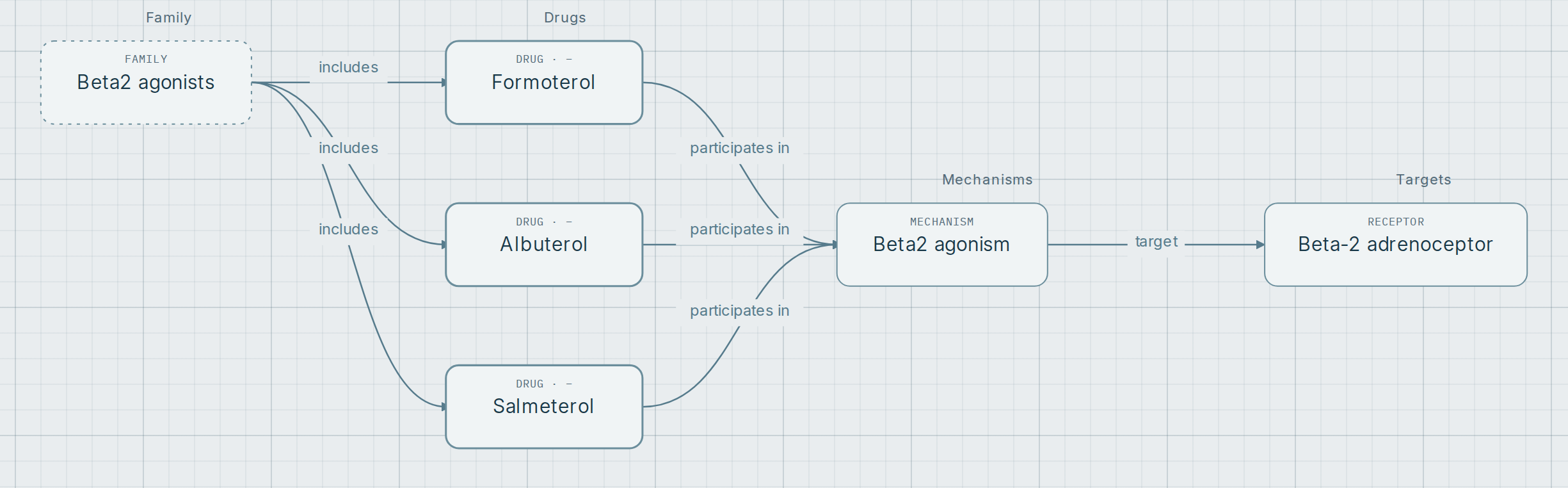
Read from left to right: family, drugs, mechanism and receptor. The family organizes the comparison; the mechanism describes the recorded action on the target. Airway smooth muscle is mentioned in the pharmacodynamic notes, but has not been added as a new node in this selection.
- Includes
- The family displays its three members. Grouping them does not transfer the properties of one drug to the others.
- Participates in
- Salbutamol, formoterol and salmeterol connect to the same mechanism: beta2 agonism.
- Target
- The mechanism points to the beta-2 adrenergic receptor. The target and the action upon it remain distinct.
Drug, mechanism and target
Salbutamol (albuterol): the drug
The record represents the racemic base, distinct from the sulfate salt and from levalbuterol. Its notes describe beta2 agonism with airway smooth muscle relaxation. US sources use the name albuterol; the Atlas node is labelled Albuterol.
β₂ agonism: the mechanism
Agonist action on the receptor is where the three branches meet. Its application depends on tissue and exposure; it does not imply absolute selectivity or allow every systemic effect to be inferred.
β₂ adrenergic receptor: the target
This is the receptor entity targeted by the mechanism. Sharing it is not enough to conclude that drugs have the same onset or duration of action, pharmacokinetics or clinical use.
A shared connection, three distinct identities
The mechanism and receptor each appear once. The branches from salbutamol, formoterol and salmeterol converge on them, while each drug retains its own notes and sources. This comparison describes a shared action, not therapeutic equivalence.
Explore for yourself
- Open the map and select Albuterol. Consult its description and relationship conditions in “Notes and legend”.
- Compare its connections with those of formoterol and salmeterol. You can close and reopen each branch while keeping the shared mechanism distinct.
- To explore further, select a drug and open “Effects” or “Transformation” in the controls. These are additional branches for that drug; their conditions do not transfer to the other members.
Opens albuterol, formoterol and salmeterol with their shared mechanism and target.
Scope and sources
This guide covers the family and drug–mechanism–target connections. It does not represent the full intracellular cascade or compare efficacy or safety. It does not provide doses, regimens or treatment selection. Effects and transformation can be explored separately, with their recorded notes and contexts.
Sources recorded for the pharmacological profiles and associations of these three members. Section 12.1 describes the mechanism; section 11 distinguishes the active moiety and chemical form. These links refer to specific products, not universal properties of every formulation: